
Last updated November 16, 2026
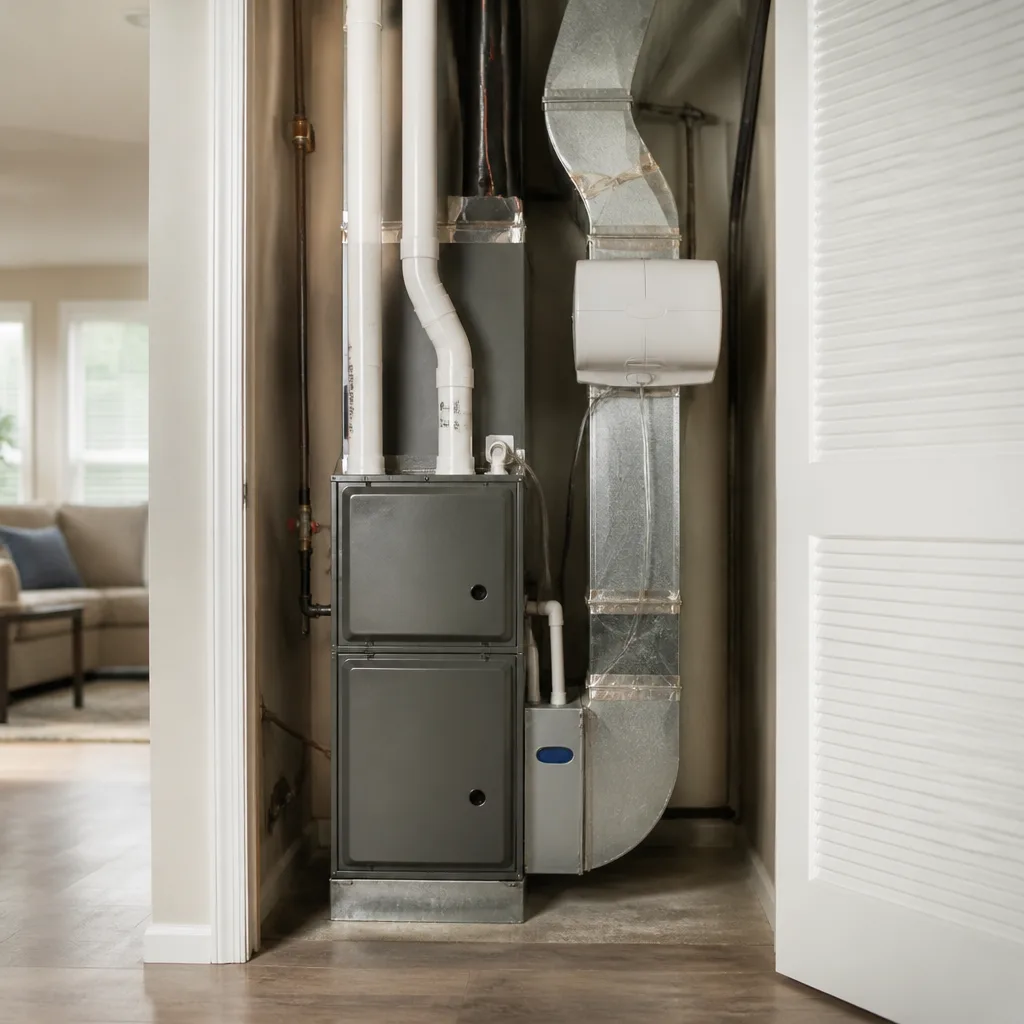 Furnace & heating
 AC repair
 Heat pumps
 Ductless mini splits
 Carrier
 Trane
 Goodman
Seasonal tune-up and full diagnostic on your Carrier, Trane, or Goodman system - readings shown to you before any repair is proposed
Diagnosis first, numbers second - you approve the repair price before a single part goes in.
Get your free estimateFurnace Replacement Maintenance Checklist for Fort Myers Homeowners
Here’s the part most furnace guides get wrong: they’re written for Minnesota, and you live in Fort Myers. Your furnace may sit completely unused for eight or nine months at a stretch. When the 40s roll into January and you turn the heat on for the first time since last February, that’s not routine operation. It’s a stress test on a machine that’s been collecting humidity, dust, and whatever the insects and lizards have been doing inside it since winter ended. That annual restart is where most Fort Myers furnace problems actually show up, not in the middle of a cold snap. This checklist walks you through pre-season startup, heat exchanger inspection, humidity corrosion, gas versus electric decisions, and the repair-or-replace math that’s genuinely different here.
Quick Answer
A Fort Myers furnace needs a deliberate startup inspection after long dormancy, not a simple thermostat bump. That means checking the burners and igniter (gas) or heating elements and sequencer (electric), inspecting the heat exchanger for humidity-driven corrosion, confirming the flue and ventilation are clear of debris and pest activity, and replacing a filter that’s been sitting in a humid air handler for months. Most Fort Myers furnaces run a few hundred heating hours again at most, so the real question isn’t wear-and-tear from use. It’s what happened while the system sat idle.
Styles & brands we work with
- AC repair
- Furnace & heating
- Heat pumps
- Ductless mini splits
- Carrier
- Trane
- Goodman
Table of Contents
- Why Your Fort Myers Furnace Is Idle Most of the Year
- The Pre-Season Startup Checklist (8+ Months Dormant)
- Heat Exchanger Integrity After Extended Inactivity
- How Humidity Corrosion Differs from Normal Wear
- Gas vs. Electric Furnace in Fort Myers
- Repair, Replace, or Switch to a Heat Pump?
- Signs It’s Time for Furnace Replacement
- In-Season and Off-Season Maintenance Calendar
Why Your Fort Myers Furnace Is Idle Most of the Year
A Fort Myers heating system lives a different life than furnaces in cold climates. In most of the country, a furnace runs a few cycles almost every day between October and April. Here, the same unit might run with real demand for only a handful of weeks, and sometimes just a scattering of mornings. During the rest of the year it sits in an air handler closet or garage, connected to ductwork, exposed to Florida humidity, disconnected from the thermostat’s “heat” setting entirely.
That idle time matters more than the run time. Metals inside a furnace and its flue don’t stop interacting with humid air because the burners are off. Seasonal moisture gets into the heat exchanger’s interior passages, the inducer blower housing, and the flue pipe, where it can evaporate and re-condense as temperatures swing. Insects and small animals treat a warm, dark equipment closet as shelter. Dust collects on the burners and the blower wheel. Meanwhile, the homeowner’s mental picture of the furnace stays frozen on “it worked fine last winter.”
That’s why a Fort Myers furnace problem usually announces itself on the first cold morning of the year, when demand suddenly returns. Blackwell Air Conditioning crews service heating and cooling together, and the pattern is consistent across the region: the failures we see aren’t from wear, they’re from dormancy. Blackwell Air Conditioning handles both sides of the system, so a furnace issue never means starting over with a separate heating contractor.
The Pre-Season Startup Checklist (8+ Months Dormant)
Run this startup sequence before the first genuinely cold forecast, ideally in early December so a technician has time to address anything you find. If you’re not comfortable with a step, skip it – the last few on the list are professional territory. Do not open the furnace cabinet to work on wiring, gas components, or the heat exchanger yourself.
- Replace the filter first. A filter that’s been sitting in a humid air handler for eight months is a dust and mold accumulation point, not a filter. If you swapped it in April, swap it now.
- Clear the return and supply vents. Furniture and storage migrate over the summer. Confirm every register is open and unobstructed.
- Check the flue pipe and vent termination (gas furnaces). From the outside, look for bird nests, leaves, and pest blockage at the termination. Inside, the flue must be secure and free of obvious corrosion. Do not take anything apart.
- Look for pest activity around the cabinet. Droppings, chewed insulation, or nesting material near the unit indicate you need a technician to open and inspect the cabinet before running the heat.
- Confirm the thermostat reads correctly and switch to heat. Watch for the blower engaging. If the blower runs but no warm air comes out, stop and call.
- Note any smell. A faint burning smell on first use is often settled dust burning off, which typically clears within a cycle. A persistent metallic or rotten-egg smell means shut the system off and call a technician.
- Let it run one full cycle. Watch the thermostat for a temperature rise. Short cycling, unusual sounds, or a system that never reaches temperature are all signs to schedule service before the cold arrives.
Our technicians have up to 9 years of experience, and the startup checks they perform go far beyond this homeowner list: combustion analysis on gas units, igniter and flame sensor testing, amp draw on electric elements, and a heat exchanger inspection that’s only possible with the cabinet open. A pre-season professional visit in Fort Myers is worth scheduling well before the first cold front.
Heat Exchanger Integrity After Extended Inactivity
The heat exchanger matters because it’s the part of your furnace that keeps combustion gases out of the air you breathe. In a forced-air furnace, combustion happens inside a sealed metal chamber, and the blower pushes household air across the chamber’s exterior without the two ever mixing. Over years, the metal can crack or develop pinholes. Those openings let carbon monoxide into the supply ducts and, from there, into your living space.
In a cold-climate furnace, the heat exchanger is under constant thermal stress from running all winter. In a Fort Myers furnace, the failure mode is different. Long dormancy means the metal is exposed to humid air from both sides, unevenly, for months on end. Condensation forms and re-evaporates repeatedly. When the system finally fires up in January, the metal sees its first real thermal expansion in nearly a year – a single hard stress event applied to metal weakened by months of moisture cycling.
What a technician actually checks during a heat exchanger inspection:
- Visual inspection of the exchanger surfaces for visible cracks, pitting, or scaling
- Flue gas analysis to look for elevated carbon monoxide levels indicating a breach
- Confirmation that the flue draft is pulling correctly and that combustion gases are leaving the house
- Inspection of the inducer blower and the connections between the exchanger and flue
This is not a step to skip because your furnace “works fine.” A cracked heat exchanger can vent carbon monoxide silently, with no visible sign from inside the home. If you smell gas, hear a persistent clicking at the unit, or a carbon monoxide alarm triggers, shut the system off, leave the area, and call from outside. furnace repair technicians are trained to evaluate this safely; homeowners who attempt to inspect the exchanger themselves risk serious harm.
How Humidity Corrosion Differs from Normal Wear
In a Fort Myers furnace, “worn out” often means “rusted from the inside,” not “worn from running.” The distinction matters because the corrosion pattern here is one you won’t see in a northern furnace with heavy seasonal hours. If your furnace has failed at a surprisingly low run hour total, humidity exposure during dormancy is a likely culprit.
Signs of humidity-related corrosion:
- Rust on the exterior of the cabinet or on the visible sheet metal around the flue connection, especially where metal surfaces show uneven orange or brown staining
- White or chalky deposits around the flue collar and the inducer housing, indicating moisture that evaporated and left mineral residue
- Flaking paint or bubbling on exterior surfaces near the bottom of the cabinet, where cool damp air tends to pool
- Deterioration of the insulation blanket on the heat exchanger itself, from the outside in
- Recurring igniter or flame sensor failures – the flame sensor’s probe oxidizes quickly in humid conditions and may need cleaning or replacement more often than the parts schedule suggests
Compare that to normal wear, which typically shows as a blower wheel that’s gradually accumulated dust, a worn motor bearing, or a failed igniter with no surrounding corrosion. Corrosion from humidity is broad and structural. Wear is localized. If the corrosion marker applies, the furnace merits a professional inspection even if it’s running, because the conversation shifts quickly from “repaired” to “replaced” once the heat exchanger or flue is compromised.
One practical habit for Fort Myers homeowners: keep the furnace closet door closed, keep the space dry, and consider a small dehumidifier in an enclosed mechanical closet if the air handler feels damp to the touch in summer. That single change reduces how much moisture gets its chance at the off-season metal.
Gas vs. Electric Furnace in Fort Myers
Fort Myers homes with furnaces split fairly evenly between gas and electric. Which type you have changes both the maintenance focus and the replacement math.
Gas furnaces in Fort Myers. Gas heating is available throughout most of the city through the local utility’s mains; certain neighborhoods and rural areas depend on delivered propane instead. Gas furnaces are efficient to run, but their maintenance obligations are higher: annual combustion analysis, flame sensor and igniter attention, flue draft checks, and gas pressure verification all matter, especially after dormancy. Gas heating also requires specialized technician skills. If you’re on FPL electric rates, though, the case for gas heating is weaker than it is in colder climates, because your heating demand is small.
Electric furnaces in Fort Myers. Electric furnaces are simpler – no gas line, no flue, no combustion. Those features are a genuine advantage in a climate where the unit sits idle for months, because there’s no combustion byproduct to manage and no flue to inspect. The trade-off is heating cost at FPL’s electric rate. In a mild winter that’s a small dollar figure, which is why an aging electric furnace is often worth replacing rather than over-repairing.
The FPL angle. Because your heating season is short, the difference in operating cost between gas and electric heating is modest here in absolute dollars. That flips the replacement calculation away from fuel choice and toward upfront cost, reliability, and how well the equipment matches the home’s load. Blackwell Air Conditioning services equipment from nine brands – Trane, Lennox, Goodman, and Rheem among them – so the recommendation is driven by your home’s actual requirements and budget, not by a vendor contract.
Repair, Replace, or Switch to a Heat Pump?
This is where Fort Myers furnace decisions are genuinely different from most of the country. In cold climates, a furnace has a heavy run load and long replacement payoff. Here, the question is often whether a furnace is even the right heating system for the next fifteen years.
When repair makes sense
- The furnace is under 12 years old and the corrosion markers are absent
- The failure is a single part – igniter, flame sensor, blower motor, control board – with no evidence of internal damage
- The heat exchanger passes inspection and combustion readings are clean on a gas unit
- The rest of the system (ductwork, thermostat, air handler) is in good condition
When replacement or a heat pump makes more sense
- The heat exchanger fails inspection or shows pitting, cracking, or heavy corrosion
- Repair estimates approach half the cost of new equipment, especially on an older unit
- The furnace is part of a system that’s also due for replacement on the cooling side – a combined decision is usually the smarter one
- You’re heating with electric resistance and the home’s cooling system is also aging
A heat pump can both heat and cool, and in a Fort Myers climate its heating capacity is well matched to your seasonal needs. When the cooling equipment needs replacement anyway, a heat pump often becomes the more sensible whole-home answer than replacing the furnace and the AC as separate systems. That’s a conversation to have with a contractor who installs both, not a contractor who sells furnaces only. AC installation and furnace work happen together on the same system, and a single contractor should be able to weigh both sides of the choice.
Signs It’s Time for Furnace Replacement
Beyond the corrosion and heat exchanger checks, several practical signs point toward replacement rather than another repair. Treat them as a checklist and act on more than one at a time.
- Repeated repairs. Two or more service calls within the same heating season on the same unit suggest the system is telling you something.
- Uneven heating. Some rooms warm and others don’t, even with a furnace running correctly, often means the equipment is undersized or the ductwork needs attention.
- Rising energy bills with the same usage pattern. Efficiency drops as equipment ages – a real indicator, not a guess.
- Unusual noises. Banging, popping, or grinding sounds on startup are more than wear; they often signal internal component failure.
- Persistent dust or soot around the vents. On a gas furnace this can indicate combustion problems or a failing heat exchanger.
- Age crossing into the mid-teens with any of the above. An aging furnace with even a modest repair history becomes a poor bet going into a Fort Myers cold snap.
For any of these, a diagnostic visit before the heating season is cheaper than an emergency call in January. Fort Myers homeowners can schedule a furnace repair evaluation that diagnoses the actual problem before recommending replacement; furnace repair capability is what tells you whether a contractor is diagnosing or just disposing.
In-Season and Off-Season Maintenance Calendar
Because your furnace’s year is so uneven, think of maintenance in two phases: pre-season (late fall, before first cold front) and post-season (early spring, after the last heat call). Each has different priorities.
Pre-season (November – early December)
- Replace the filter that sat through the summer.
- Check the flue termination outside for nests and blockage.
- Look for pest material around the unit cabinet.
- Schedule a professional startup inspection.
Post-season (March – April)
- Run the furnace one final cycle before switching the thermostat to cooling.
- Change the filter again if the heating season added dust load.
- Seal or dry any moisture you find around the furnace closet.
- Book an AC tune-up on the cooling side to keep the whole system in rotation.
Keeping the air filter fresh twice a year, rather than once, is one of the small habits that makes the biggest difference in a humid climate – because the filter is the part that spends the most time in permanent contact with the indoor air. In a Fort Myers home where the same air handler serves both heating and cooling, the filter is doing year-round duty. Treat it that way.
Common Mistakes to Avoid
- Treating January’s first cold snap as evidence the furnace failed. It didn’t fail – it exposed a problem that started during dormancy. Get it inspected in late fall, not after the fact.
- Skipping the pre-season professional inspection because “it worked last year.” In Fort Myers, last year’s performance says nothing about what eight months of humidity and pests have done since. The first cold morning is the wrong time to find out.
- Confusing the faint first-startup smell with a real problem, or real combustion smells with “just dust.” A faint burn-off smell first cycle is normal. Persistent metallic or rotten-egg smells are not – shut the unit off and call.
- Over-repairing an old electric furnace. Electric furnaces in a short heating season can be cheap to replace and are rarely worth a major repair bill once they’re past their useful life.
- Ignoring corrosion because the unit still runs. Rust on the cabinet and white deposits around the flue are early warnings. Once the heat exchanger is breached, this stops being a maintenance issue.
- Calling a single-brand dealer and taking whatever furnace they offer. Brand breadth matters in a mild climate where matching equipment to the home’s load is the whole game. One brand means one answer.
- Assuming the flue is fine because you’ve never had a problem. In a humid climate, flues attract birds and insects that build nests blocking the vent. A clear termination outside is a check you can make in under a minute.
See the difference
 Before
 After
 Before
 After
 Before
 After
When to Call a Professional
Some furnace checks belong in your hands: filter changes, vent clearance, and a visible look at the flue termination. Others don’t. Call a technician for any of the following:
- The furnace fails to ignite or ignites repeatedly without holding flame
- You smell gas, notice soot around the burners, or a carbon monoxide alarm sounds
- The blower runs but doesn’t produce heat
- You hear banging, popping, or grinding on startup
- The heat exchanger has visible rust, pitting, or deposits
- The system short cycles or won’t hold temperature
For any of these, Blackwell Air Conditioning offers free estimates in Fort Myers – call (833) 946-8616. We answer 24/7. Fast dispatch from 7am to 7pm, Sunday through Friday. Our technicians have up to 9 years of experience, and because we work across nine major brands – Carrier, Trane, Lennox, Goodman, Rheem, York, Daikin, Bryant, and American Standard – our recommendation is driven by your home’s needs, not a single manufacturer’s contract.
Frequently Asked Questions
Once a year, scheduled before the heating season begins – typically in November or early December so problems are caught before the first cold forecast. Because your furnace sits dormant for eight or nine months, the pre-season visit does most of the work. Post-season checks in March or April are useful to seal moisture and confirm the unit is ready for dormancy, but they don’t replace the pre-season inspection. Call (833) 946-8616 for a free estimate on scheduling.
If your cooling equipment also needs replacement, a heat pump is usually the better decision in this climate. If only the furnace is failing and the cooling system is healthy, a furnace repair or replacement may be more sensible. The answer depends on the equipment’s age, the state of the cooling side, and whether the heat exchanger is compromised. A diagnostic visit clears that up quickly. Call (833) 946-8616 for an honest repair-or-replace conversation, not a push toward replacement.
Both are possible, and the two are diagnosed differently. A clogged filter, dirty blower wheel, or failing igniter can reduce heat output without failing entirely. Poor room-by-room distribution often points to ductwork or a system that’s undersized for the home. Get it diagnosed before the cold snap. Call (833) 946-8616 and we’ll walk through the symptoms with you.
You generally can’t tell from the outside. Signs that point toward a professional inspection include rust or pitting visible on the exchanger surfaces, soot around the burners or on the cabinet, soot or discoloration on the supply vents, and carbon monoxide alarms. No homeowner should attempt to verify a heat exchanger crack without training. Call a technician. If a CO alarm sounds, leave the home and call from outside – then call (833) 946-8616. We answer 24/7.
Yes, and the dormancy does more damage than the run hours. Humidity cycles in and out of interior furnace passages over months, creating corrosion and pitting that a constantly running furnace wouldn’t experience in a colder climate. That’s why corrosion on the cabinet, white deposits at the flue collar, and recurring flame sensor failures show up on Fort Myers furnaces with relatively low run hours. Maintenance should focus on moisture and dormancy, not just wear. Call (833) 946-8616 for a free estimate if your furnace’s cabinet or flue looks rusty.
Furnace replacement pricing depends on the system size, efficiency tier, fuel type, and install complexity, and we don’t give real numbers without a written estimate – because we’d rather give you one good estimate than a range that turns out wrong. The written estimate sets the final price and is free. If a heat pump also handles cooling, pricing looks different from a straight furnace swap. Call (833) 946-8616 for a free estimate and we’ll walk you through the options against your home and budget.
The Bottom Line
A Fort Myers furnace doesn’t fail from overuse. It fails from dormancy – eight or nine months of humidity, dust, and pest exposure followed by one cold morning when everything has to work at once. Run the pre-season checklist before the first cold forecast, replace the filter twice a year rather than once, and take any sign of corrosion seriously, especially around the heat exchanger and flue. When the repair math moves toward replacement, decide with a contractor who handles the whole system and installs across multiple brands, so the answer matches the home. Blackwell Air Conditioning handles AC installation, furnace replacement, and furnace repair on the same equipment. Call (833) 946-8616 for a free estimate. We answer 24/7. Fast dispatch from 7am to 7pm, Sunday through Friday.
Written by the team at Blackwell Air Conditioning.